
Which Direction Should You Lay Your Hardwood Flooring?
12/30/25
Which Direction Should You Lay Your Hardwood Flooring?
Everyone agrees that hardwood flooring is universally gorgeous. But not everyone agrees on the direction that hardwood flooring should be laid. As with every update you make to your home, it is important to take a step back and consider your options. Vertical, horizontal, herringbone, diagonal - you have a number of choices for how your floor is laid as well as other factors to consider.
The most common way to lay hardwood flooring is by aligning the planks parallel to the longest wall. Apart from a few exceptions like sagging joists, this is the preferred direction to lay wood floors because it aesthetically provides the best result. But there are other options. With every choice you will want to consider not only each individual room but also your entire floor plan so that your flooring looks cohesive as you move from room to room.
Light Source

One of the factors to consider when you are installing new hardwood flooring is your light source. If your room has a great deal of natural light, you may want to consider running the boards in the direction of the light. Because if your planks are run perpendicular to the light source, the light will run across each individual joint and any slight variation in the height of the boards will show up and cast a small shadow. Running your wood planks in the same direction as the light source eliminates this problem and results in a better looking floor.
Straight/Vertical

Typically, hardwood floors are laid in a straight pattern. To achieve this look, planks are installed parallel to each other along the length of your room. Classic and stylish, this pattern is tried and true, and works with virtually any design aesthetic. A straight pattern can also lengthen the look of a room. In most homes, if you run a straight pattern lengthwise from your front door all the way to the back it will make your hallway appear longer as opposed to a horizontal pattern running across which may end up looking like a ladder.
Horizontal/Side to Side

If your room is more narrow, you might opt to run your flooring horizontally — making the space appear larger than it really is. Installing your flooring horizontally will draw the eye from side to side, creating a greater perception of space.
Herringbone

In the traditional herringbone pattern, wood planks are laid in a diagonal zigzag pattern. Herringbone is one of those classic looks that will never go out of style and makes a statement in just about any space. There are a couple of things to consider with this option. Due to the complexity of the design, you will want to make sure that your installer is experienced in creating this type of pattern. You will also want to remember that due to the way that the pattern is precisely cut there will be some additional waste which will increase your cost slightly.
Diagonal

Diagonal floors add interest to a room without taking a huge leap from straight flooring. Installing hardwood on a diagonal can have a tremendous visual impact on the room's look, making the space feel larger and longer.
Pattern

There are an endless number of flooring designs that can be achieved by laying the wood planks in repeated geometric patterns. A pattern can be a simple offset or can be a more complicated parquet floor pattern with the appearance of a checkerboard or other design modules. Although a pattern requires careful planning, it can be a wow-worthy feature in your home.
Random Width
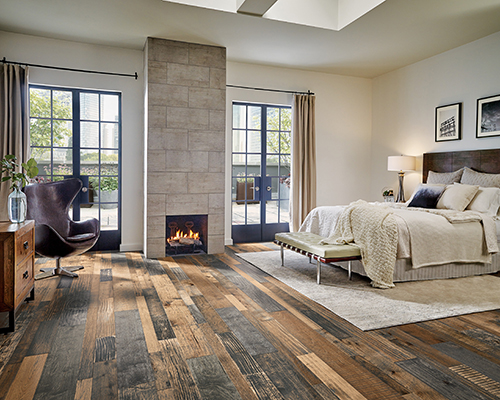
Random pattern installations involve a mixture of boards that are different widths, although they are actually a straight-forward parallel design. This hardwood flooring pattern enables you to choose the ratio of wide and narrow boards, resulting in a uniquely customized look. This pattern works well when your goal is to achieve a more rustic feel.
Become inspired by browsing our collection of hardwood flooring options here.
The way that your hardwood is installed can have an amazing impact on the look and feel of your home. From planning and design to tear-out and install, our Flooring Experts are here to help you every step of the way to complete your project and achieve your goals.
Schedule an in home appointment shopping today or visit our website to learn more about RiteRug Flooring.
Hardwood Flooring Direction FAQs
Common questions about choosing the best direction and pattern for hardwood flooring installation.
In most homes, the best direction to lay hardwood flooring is parallel to the longest wall or main sightline. This layout typically provides the most visually appealing result and helps create a sense of openness. However, factors like room shape, structural considerations, and overall floor plan should also be taken into account.
Hardwood flooring often looks best when installed in the same direction as the primary light source. When boards run perpendicular to incoming light, seams and slight height variations can cast shadows depending on the texture and color of the wood. Running planks with the light helps minimize this effect and results in a smoother-looking floor. Reviewing samples in the room at different times of day can help identify potential issues before installation.
Hardwood flooring does not always need to run in the same direction throughout the home, but consistency does improve visual flow. It is important to consider not only each room individually, but also how the flooring looks as you move through connected spaces.
Straight planks installed lengthwise typically make rooms and hallways appear longer and more open. For example, running planks from the front door toward the back of the home can elongate a hallway, while horizontal layouts may make a space feel wider.
Herringbone and diagonal hardwood patterns typically cost more to install due to added labor and increased material waste. These designs require precise cutting and expert installation, which can increase overall project costs.
In many cases, engineered hardwood can be installed in the same patterns as solid hardwood, depending on the product. Reviewing manufacturer guidelines and consulting with a Flooring Expert can help ensure the desired pattern is appropriate for the material.
Traditionally, hardwood flooring was installed perpendicular to floor joists, though modern subfloors often allow more flexibility. Structural conditions such as sagging joists or subfloor construction may influence the best installation direction.
The best hardwood layout depends on your floor plan, lighting, room dimensions, and overall design goals. Considering how each room connects and how light enters the space can help create a balanced and cohesive look.
Professional installation is strongly recommended for patterned hardwood layouts such as herringbone or diagonal designs. These patterns require precision and experience to ensure proper alignment, minimize waste, and achieve the desired finished look.